What a High Protein Diet for Weight Loss Actually Does (And Why It Works)
A high protein diet for weight loss is one of the most evidence-backed approaches to shedding fat while keeping your muscle — and in 2026, the clinical research behind it is stronger than ever.
Here’s the quick answer if you’re short on time:
- What it is: Eating 1.2–1.6g of protein per kilogram of body weight daily (well above the standard 0.8g/kg RDA)
- How it helps you lose weight: Protein keeps you fuller longer, burns more calories during digestion, and protects muscle mass as you lose fat
- How much to eat per meal: Aim for 25–30g of protein at each meal, spread across 3–4 meals per day
- Best food sources: Chicken breast, eggs, Greek yogurt, cottage cheese, salmon, lentils, and tempeh
- Key result from research: High-protein diets produce 0.87 kg greater fat mass loss and 52% less weight regain compared to standard-protein diets
Losing weight is hard enough without constantly fighting hunger, losing muscle, or watching the scale creep back up after you’ve worked so hard to move it.
That’s exactly why protein matters so much. It’s the one macronutrient that works on multiple fronts at once — curbing appetite, boosting metabolism, and protecting the lean muscle that keeps your body burning calories even at rest.
Unlike trendy diets that demand extreme restriction or complicated rules, the core idea here is simple: eat more protein, feel fuller, lose more fat.
The science backs it up. Meta-analyses covering dozens of clinical trials consistently show that people on high-protein diets lose more fat and keep more of it off — without the same muscle loss that often comes with standard calorie-cutting approaches.
This guide walks you through everything: how it works, how much you need, the best foods to eat, a full 7-day meal plan, and what to watch out for — so you can start with confidence.
How a High Protein Diet for Weight Loss Works
When we talk about a high protein diet for weight loss, we aren’t just talking about “eating more meat.” We are talking about leveraging the unique biological properties of protein to change how our bodies process energy.
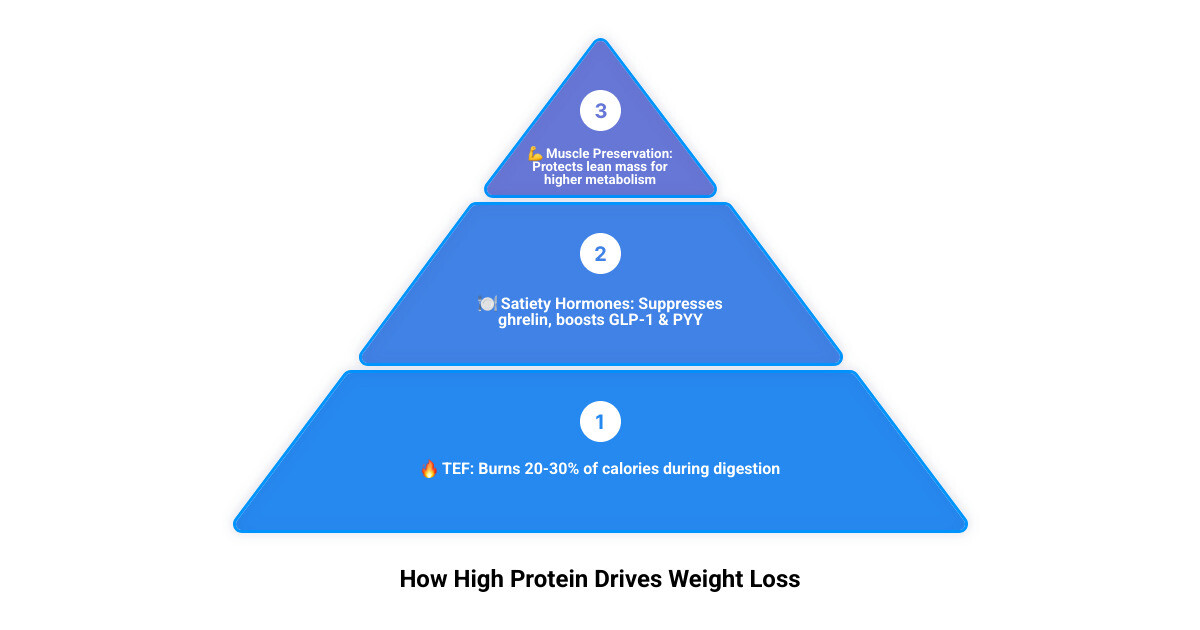
The first secret weapon in protein’s arsenal is the Thermic Effect of Food (TEF). Every time we eat, our body uses energy to break down that food. However, not all calories are created equal in this regard. While fats use about 0–3% of their energy for digestion and carbohydrates use 5–10%, protein requires a whopping 20–30%. This means if you eat 100 calories of chicken breast, your body effectively “burns off” 20 to 30 of those calories just by digesting them!
Beyond the metabolic furnace, protein is a master of hormone regulation. It suppresses ghrelin (the “hunger hormone” that makes your stomach growl) while simultaneously boosting levels of GLP-1 and PYY, which are anorexigenic hormones that tell your brain you are full. This is a primary reason why people on high-protein plans often find themselves naturally eating fewer calories without the “hangry” irritability common in other diets.
Finally, there is the issue of muscle protein synthesis. When we lose weight, our bodies often take energy from both fat and muscle. By providing a steady stream of the amino acid leucine, a high-protein diet signals the body to preserve lean tissue. If you’ve ever wondered Why You’re Not Losing Weight (Even When You Think You Are), it might be because a low protein intake is causing your metabolism to slow down as you lose muscle. Scientific research on protein-induced satiety and weight loss confirms that this preservation is key to long-term success.
Metabolic Advantages of Protein
The metabolic benefits go deeper than just feeling full. High-protein diets have been shown to maintain Resting Energy Expenditure (REE). Normally, when you lose weight, your metabolism drops because there is less of “you” to maintain. However, because protein preserves fat-free mass, your metabolic rate stays higher.
In a meta-analysis of 24 randomized controlled trials involving over 1,000 participants, those on a high-protein diet saw 0.87 kg greater fat mass loss and 0.43 kg greater preservation of fat-free mass compared to those on standard protein diets. Most impressively, these diets resulted in 52% less weight regain because the participants weren’t just losing “weight”—they were losing fat and keeping the muscle that keeps their metabolism humming.
Core Principles and Nutritional Guidelines
To get the most out of a high protein diet for weight loss, we need to look past the “Recommended Dietary Allowance” (RDA). The RDA for protein is currently set at 0.8g per kilogram of body weight. While this is enough to prevent a protein deficiency in a sedentary person, it is nowhere near enough to optimize fat loss or muscle health.
For weight loss, we generally recommend aiming for 1.2 to 1.6 grams of protein per kilogram of body weight. For a 180-pound woman (about 82kg), that means moving from the RDA of ~65g per day to a target of roughly 100g to 130g per day.
The Golden Rule of Distribution: Your body can’t “store” protein for later the way it stores fat. To maximize muscle preservation and keep hunger at bay, you should distribute your intake evenly. Aim for 25–30g of protein at every meal. This ensures you are constantly fueling muscle repair and keeping those satiety hormones active.
If you are looking for a How to Lose Weight Fast Without Starving Yourself: Proven Strategy, using “protein anchors”—building every meal around a lean protein source first—is the most effective way to start.
| Food Item | Serving Size | Protein (g) |
|---|---|---|
| Chicken Breast | 3 oz | 26g |
| Greek Yogurt (Plain) | 6 oz | 17g |
| Lentils (Cooked) | 1/2 cup | 9g |
| Cottage Cheese | 1/2 cup | 12g |
| Egg (Large) | 1 egg | 6g |
| Salmon | 3 oz | 22g |
| Tempeh | 3 oz | 16g |
Choosing the Best Sources for a High Protein Diet for Weight Loss
Not all protein sources are created equal. For weight loss, we want “lean” proteins—those that provide the most protein for the fewest calories.
Animal Proteins:
- Chicken and Turkey Breast: The gold standard for lean protein.
- Egg Whites: Pure protein with almost no fat or carbs.
- Wild-Caught Salmon: Provides high protein plus omega-3 fatty acids which help reduce inflammation.
- Greek Yogurt and Cottage Cheese: Excellent sources of casein, a slow-digesting protein that keeps you full for hours.
Plant-Based Options:
- Tempeh and Tofu: Great “complete” proteins that provide all nine essential amino acids.
- Edamame and Lentils: High in fiber, which works alongside protein to double down on fullness.
- Seitan: A wheat-based protein that is surprisingly high in protein, often used as a meat substitute.
Potential Risks and Long-Term Considerations
While a high protein diet for weight loss is safe for most healthy adults, there are some nuances to consider. One of the most common myths is that protein “damages” the kidneys. In reality, for people with healthy kidney function, there is no evidence that high protein intake causes harm. However, if you have pre-existing chronic kidney disease, you must consult a doctor, as your kidneys may struggle to filter the waste products of protein metabolism.
We also have to look at metabolic health beyond the scale. A fascinating Scientific research study on protein and insulin sensitivity found that in postmenopausal women, very high protein intake (1.2g/kg) actually prevented the improvements in insulin sensitivity that usually come with weight loss. While the women lost weight, their metabolic “fitness” didn’t improve as much as those on a standard protein diet. This suggests that for certain populations, “more” isn’t always “better” once you hit a certain threshold.
Another risk is the “meat-only” trap. If you focus so much on protein that you forget fiber, you’ll likely face digestive issues. High-protein eating must be balanced with plenty of leafy greens, cruciferous vegetables, and hydration to keep your system moving smoothly.
Sustainability and Psychological Benefits
One of the biggest reasons we love this approach at Apex Insight Hub is that it reduces decision fatigue. When you know that every meal must start with a protein anchor, your grocery shopping and meal planning become much simpler.
Psychologically, being “full” is the ultimate diet hack. Most diets fail because of the constant mental battle against cravings. By keeping your blood sugar stable and your stomach physically satisfied, a high-protein diet allows you to focus on your life rather than your next meal. This makes it much more sustainable for social eating—it’s much easier to find a lean steak or grilled fish at a restaurant than it is to find a specialized “keto” or “low-fat” meal.
Sample 7-Day High Protein Diet for Weight Loss Meal Plan
Ready to start? Here is a sample week to show you how delicious and varied this lifestyle can be.

- Day 1:
- Breakfast: 3 scrambled eggs with spinach and 1/4 cup cottage cheese mixed in (for creaminess).
- Lunch: Grilled chicken salad with plenty of greens, cucumbers, and a lemon-tahini dressing.
- Dinner: Baked salmon with roasted asparagus and a small side of quinoa.
- Day 2:
- Breakfast: Greek yogurt parfait with a scoop of protein powder, berries, and a few almonds.
- Lunch: Turkey chili (using lean ground turkey and beans).
- Dinner: Tofu stir-fry with broccoli, bell peppers, and snap peas.
- Day 3:
- Breakfast: Protein pancakes made with egg whites, oats, and protein powder.
- Lunch: Canned tuna (in water) mixed with Greek yogurt and mustard on whole-grain crackers.
- Dinner: Lean beef sirloin tips with sautéed mushrooms and green beans.
- Day 4:
- Breakfast: Cottage cheese bowl with sliced peaches and hemp seeds.
- Lunch: Leftover turkey chili.
- Dinner: Grilled shrimp skewers with a large side of Mediterranean salad.
- Day 5:
- Breakfast: 2 hard-boiled eggs and a protein shake with greens.
- Lunch: Chicken breast wrap using a high-fiber tortilla.
- Dinner: Pork tenderloin (lean) with roasted Brussels sprouts.
- Day 6:
- Breakfast: Omelet with egg whites, turkey bacon, and peppers.
- Lunch: Lentil soup with a side of grilled tempeh.
- Dinner: Baked cod with a crust of crushed pistachios and steamed zucchini.
- Day 7:
- Breakfast: Smoked salmon and cream cheese (low-fat) on a high-protein bagel.
- Lunch: Roast beef slices rolled up with cheese and bell pepper strips.
- Dinner: Ground chicken taco bowls (no shell) with black beans and avocado.
High-Protein Snacks to Keep on Hand:
- Beef jerky (low sugar)
- Roasted chickpeas
- String cheese
- Edamame
- Hard-boiled eggs
Strategies for Long-Term Success
To make this stick, you need more than just a menu. Meal timing is your friend; try not to go more than 4–5 hours without a protein source to keep your metabolism steady.
Hydration is also critical. Protein metabolism requires more water than carbohydrate metabolism, so aim for at least 2–3 liters of water a day. Finally, don’t be afraid to track your intake for the first few weeks. Most people think they eat a lot of protein, but once they track it, they realize they are only hitting 60g or 70g. Using an app for 14 days can help you recalibrate your “eye” for portion sizes.
Frequently Asked Questions about High Protein Eating
Can I eat too much protein on a high protein diet for weight loss?
For most healthy people, the “upper limit” is quite high—around 2.2g per kg of body weight. Beyond this, you aren’t necessarily hurting yourself, but you are likely just eating extra calories that don’t provide additional muscle-building benefits. If you notice digestive discomfort or “brain fog,” you may want to scale back slightly and increase your fiber and water intake.
Does eating more protein help with belly fat specifically?
While you cannot “spot reduce” fat, high-protein diets are particularly effective at reducing visceral fat (the dangerous fat around your organs). This is because protein helps regulate insulin and reduces cortisol, the stress hormone often linked to abdominal fat storage. By improving your overall body composition, the belly is often one of the first places people notice a change.
Is a high protein diet for weight loss safe for vegetarians?
Absolutely! While it takes a bit more planning to get “complete” proteins (which contain all amino acids), it is entirely possible. Focus on soy products (tofu, tempeh, edamame), seitan, and nutritional yeast. Legumes like lentils and chickpeas are great, but since they also contain carbs, you’ll need to account for those in your total daily calories. A high-quality plant-based protein powder (pea or soy) can also help bridge the gap.
Conclusion
The journey to a healthier you doesn’t have to be a battle against your own biology. By adopting a high protein diet for weight loss, you are choosing a path that respects your body’s need for satiety, protects your hard-earned muscle, and gives your metabolism a natural boost.
At Apex Insight Hub, we believe that accurate, research-based information is the foundation of every great health decision. Whether you are just starting your weight loss journey or looking to break through a plateau, increasing your protein intake is one of the most effective tools at your disposal.
The best diet isn’t the one that’s the most restrictive—it’s the one you can sustain while feeling your best. So grab that Greek yogurt, prep that chicken, and start fueling your progress!
For more personalized guidance on your wellness journey, check out our More info about health advisor services to find a plan that fits your unique needs.